Crime Scene Cleanup
Crime scene cleaning after police release the property, from blood to odor.
See crime scene cleanupGet blood, bodily fluids, contaminated materials and odor removed after investigators release a home, rental, business or vehicle in Miami-Dade County. The cleanup scope is based on where contamination traveled.
Homicide cleanup means removing blood, other bodily fluids and contaminated material from a released property after investigative work is complete. It is a specialized type of crime scene cleanup.
Cleaning the property is not part of the work performed by law enforcement or the medical examiner, whose attention is on the investigation. After scene release, the homicide cleaning service may be arranged by relatives, a property owner, a landlord or another authorized person.
The cleanup process goes beyond ordinary cleaning services. Cleanup technicians locate contamination in the affected area and surrounding areas, protect unaffected rooms, remove materials that cannot be disinfected and treat cleanable surfaces. The work also includes hazardous waste packaging, waste disposal, odor removal and records for an insurance company when requested.
During a painful event, privacy can be supported when you limit entry to approved people and ask that crews arrive in unmarked vehicles.
Ask which materials can be cleaned, which need removal, how waste exits the site and what the restoration stage will include.
Your discussions with insurance companies and property owners may be supported by photographs, item inventories, work notes and waste documentation.
You are consulted about recoverable personal property after it is isolated and before a removal decision occurs.
A homicide cleaning service is needed if a violent death leaves biological material or blood in a vehicle, business, rental or home. Situations that commonly require this work include:
An assessment of seats, insulation, trim and carpet identifies what may remain after cleaning and what needs removal.
Visible blood may continue beneath flooring or behind trim, which makes surface wiping incomplete.
Tracing the entire path is necessary when tissue and blood can reach carpet, walls, furnishings, ceilings or concealed joints.
The affected area can stay separate during contamination assessments of offices, warehouses, stores and common spaces.
Begin by honoring the investigation, limiting exposure and keeping information that may help with a claim. Take these steps before cleanup technicians are allowed to enter:
Call (888) 351-0904The published planning figures in available homicide cleanup cost guides range between $2,500 and $9,000 when the work involves a violent crime scene. A smaller scene has figures from $2,000 to $6,000 while a larger scene has figures from $3,000 to $10,000 under those guides. These amounts do not serve as a quote. The assessment shapes the final scope.
Published national cost guides are the source for these ranges, rather than an inspection of your property. After an on-site assessment, the price for your property is determined and shared with you before cleanup begins.
Ask about cost: (888) 351-0904A renters, commercial or homeowners policy may cover homicide cleanup costs. The particular policy, nature of the loss and applicable deductible determine coverage.
Responsibility for arranging the work and covering the cost can vary with local law, ownership, insurance terms and the lease. Tenants and landlords should each contact the appropriate insurer.
Tell the insurer what happened after police release the scene. Ask whether biohazard cleanup, damaged building materials and restoration are included.
Victims of violent crime can ask the Florida Attorney General's Bureau of Victim Compensation about cleanup, since its rules count crime scene cleanup costs as a compensable loss. Insurance is usually checked first.
Have the insurance company identify every needed invoice, photo, item list, disposal record and scope note. Save a copy of every submitted document.
The remediation process follows a controlled order after scene release. Every step is based on where contamination traveled, which materials can be saved and what waste rules apply.
Known affected areas are identified by the authorized person, then technicians assess surrounding surfaces, contents, floor borders and possible routes of spread.
The cleanup area is isolated from unaffected rooms. Cleanup technicians use suitable personal protective equipment and controls that reduce tracking beyond the scene.
Visible blood and bodily fluids are collected with methods suited to each surface before detailed cleaning and disinfection begin.
If carpet, drywall, pad, subfloor or upholstery cannot be thoroughly disinfected, removal is limited to the minimum workable area.
Cleanable materials undergo detailed scene cleaning before an EPA-registered disinfectant is applied and stays wet throughout the label contact time.
Targeted treatment and air filtration can address odors in connected spaces, room air and retained materials once the source has been removed.
Applicable rules guide the sealing, labeling and movement of contaminated waste, while available disposal documentation is kept.
The closing assessment examines completed work, returns salvageable personal property according to the agreement and records removed finishes for restoration services.
Call any hour. Your homicide cleanup specialist answers the phone, describes what happens next and works with you on a start time.
Blood, other bodily fluids and contamination hidden from view may create serious health risks. A dry appearance or a visibly small area does not remove those concerns.
Fluids may travel into carpet padding, joints, grout, walls and the subfloor. Wiping what you can see leaves contamination within material below the surface or behind it.
Hepatitis C, HIV and hepatitis B may be present in blood. Hepatitis B can live on surfaces for at least seven days, the CDC says, which makes controls necessary even for dry blood.
Applicable medical waste rules may require regulated disposal, transportation and packaging for used protective equipment and saturated porous materials.
Can you clean it yourself? For a minor fresh blood spot on solid material that does not absorb fluids, wear disposable gloves and apply an EPA-registered disinfectant throughout the contact time stated on its label. Stay out and seek professional cleanup if blood affected drywall, fabric, wood, carpet or any space whose boundaries are uncertain.
The schedule depends on scene size, the depth of contamination, the number of rooms, scene access and the amount of material that must be removed. You can get a more useful timeline after the initial assessment.
| Scene | Typical time on site |
|---|---|
| Small affected area on accessible surfaces | Timeline determined once the scene is released and inspected |
| One room with porous material removal | May involve cleanup followed by restoration as another phase |
| Several rooms or structural contamination | Typically requires work in stages followed by a longer restoration |
Odor removal begins by finding and removing the source. Fragrance alone cannot correct fluids absorbed into carpet, subfloor, drywall, furniture or hidden cavities.
Once contaminated materials are gone, airborne particles can be filtered with HEPA air scrubbers. Hydroxyl treatment is an option for occupied spaces when permitted by equipment instructions. Ozone treatment needs an empty area and strict controls. Before you proceed, the cleaning process may also involve inspecting neighboring rooms and vents.
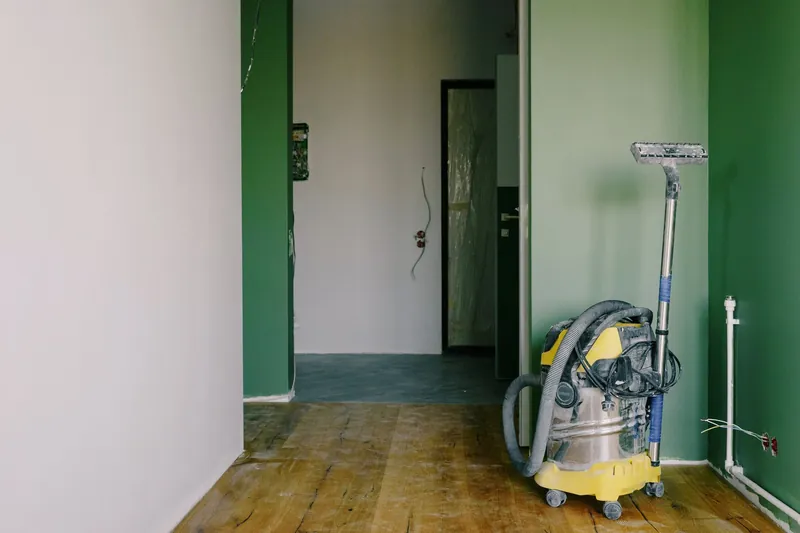
Under 29 CFR 1910.1030, the OSHA Bloodborne Pathogens Standard addresses worker training, protective equipment and exposure controls.
The selected disinfectant should have EPA registration for its intended purpose and stay on the material for the complete labeled contact time.
Florida calls it biomedical waste, and the term covers absorbent materials saturated with blood or body fluids. The Florida Department of Health's rules control packing, transport and treatment, so it cannot go in household trash.
Florida uses district medical examiners, with the Medical Examiners Commission under the Florida Department of Law Enforcement overseeing them. Cleanup starts after police or the medical examiner release the scene.
The full homicide cleanup guide covers what is cleaned or removed, odor and air quality work, and the rules that apply in your state.
Read the full homicide cleanup guide
Planning for access, containment and cleanup can depend on local population, housing and entry conditions.
At 59.6% renter occupancy, access rules and communication with building management can shape how quickly a contaminated area is isolated.
A 1963 median build year points to varied interior finishes, so each affected material needs its own cleaning or removal decision.
Although the share is 26.1%, seniors living alone can still face delayed discovery after an illness, injury, or death.
Because 53.3% of housing is single-family, some calls involve one household while others require coordination around shared building areas.
Your phone conversation can include questions about service in nearby ZIP codes and communities.
Crime scene cleaning after police release the property, from blood to odor.
See crime scene cleanup
Blood cleanup clears blood from furniture, walls, hard floors and carpet, followed by safe disposal.
See blood cleanup
Trauma scene cleanup is needed after violent events, accidents and injuries.
See trauma scene cleanup
After a person dies at home, cleanup addresses fluids, odors and belongings that were affected.
See death cleanup
Private, careful suicide cleanup so families do not have to face the scene.
See suicide cleanup
Cleanup when a death went unnoticed for days, with decomposition and odor control.
See unattended death cleanup
Investigation residue, tissue and fingerprint powder are addressed along with forensic cleaning of blood.
See forensic cleaning
Death odor removal targets the source through ozone treatment, hydroxyl and air scrubbers.
See death odor removalFor violent crime scene work, the published homicide cleanup cost is $2,500 to $9,000. Published figures put a smaller scene between $2,000 and $6,000, while the larger range runs from $3,000 to $10,000. The finished scope depends on police release, disposal needs, contamination depth, room count and scene size.
Cleanup technicians first map the affected area and set containment. After putting on protective gear, technicians collect material they can see. They remove porous items beyond disinfection, clean surfaces left in place and follow the label contact time when using a disinfectant registered by the EPA. Hazardous waste is packaged before the finished scope receives a final check.
Items outside the contaminated zone can be protected in place or moved to a clean area. Items within the scene are assessed individually. Non-porous belongings made from hard materials may be cleanable. Porous belongings may require removal, but you should be consulted about photographs, documents and treasured items before any choice is final.
Cleaning it yourself is inappropriate if blood reached an unseen space or absorbent materials such as carpet, drywall, furniture, fabric or wood. Serious health risks can result from contamination you cannot see and bloodborne pathogens. Until official release, keep pets and people outside, then arrange professional cleanup if you cannot identify the affected area's complete limits.
Each falls under death cleanup and trauma scene cleanup, yet the conditions may not be the same. Until law enforcement releases a homicide scene, it stays under official control and may contain residue from evidence processing. Because the person was not found immediately, an unattended death commonly brings decomposition and odor concerns across a larger area.
Both authorities must clear the property first: law enforcement and the medical examiner. A relative, landlord, manager or owner with authority can then arrange cleanup. Homicide cleaners may address hazardous waste removal, odor control, disinfection, blood cleanup and biohazard remediation. Police investigate the scene, but they do not perform the cleaning service.
You can request respectful, discreet homicide cleanup 24 hours a day, and crews use unmarked vehicles.